Home / Using your NDIS Funds

Using your NDIS Funds

Resource Author: Bianca S. | NDIS Expert   Last Updated: 11 March 2026
NDIS

Psychosis Vs Schizophrenia?

Psychosis and Schizophrenia are sometimes confused.

Psychosis can happen to anyone. It is an altered state of consciousness whereby the person experiences things that are not there, like hallucinations.

These can be:

  • auditory (voices)
  • visual
  • olfactory (smell)
  • tactile (bodily sensations)

Extreme fatigue, stress or illicit drug use can all trigger psychosis. So too can organic illness such as delirium.

Psychosis is one symptom of Schizophrenia and may be indicative of this illness. However, it could just as easily indicate another illness such as Bipolar or depression.

Someone with Schizophrenia can (and often will) experience psychosis. The difference is that Schizophrenia describes a cluster of symptoms and relates to a severe mental disorder.

Typically someone diagnosed with schizophrenia may experience positive; negative and cognitive symptoms.

Positive symptoms include:

  • Hallucinations
  • Delusions
  • Confused thoughts/disorganised speech
  • Movement disorders (from catatonia to restlessness and inability to sit still.

Negative symptoms include:

  • Lack of pleasure
  • Difficulty speaking
  • Socially withdrawn
  • Struggling with motivation to attend to self care

Cognitive symptoms include:

  • Difficulties organising thoughts
  • Poor attention
  • Poor memory

Are people with Schizophrenia eligible for NDIS support?

Among other requirements, in order to receive NDIS funding a person must have a permanent, lifelong disability which severely affects their functional capacity.

Schizophrenia is considered a severe and enduring mental disorder.  

The WHO assert that ‘worldwide, schizophrenia is associated with considerable disability and may affect educational and occupational performance’.

Two-thirds of people with schizophrenia demonstrate impairment of self-care as well as social and occupational disability (AFP)

Although some people can recover and be free from symptoms, many experience lifelong treatment resistance, chronic positive and negative symptoms, as well as cognitive impairment

People with schizophrenia can face a myriad of associated health and social problems and are at much higher risk of committing suicide than the general population (Hor & Taylor, 2010).

The World Health Organisation also highlights that stigma, discrimination and abuse of Human Rights is common in Schizophrenia (WHO, 2021). One study suggests up to 64% of people with this diagnosis will experience stigma or abuse (Gerlinger et al., 2013).

Increase in access to the NDIS

An estimated 690,000 Australians live with mental illness.

Data from the NDIS shows that at 30 Sept 2020 there were 40,508 people with psychosocial disability (9% of all NDIS participants) who currently have NDIS plans.

Initial planning for the NDIS focused on physical and intellectual disability. As such, many of the nuances and difficulties around participation in the NDIS, for people with psychosocial disability were missed.

One of these difficulties is that people with mental illness often live lives in which they do not engage with mainstream services and may find it hard to provide evidence of disability.

The language used for NDIS inclusion criteria - that of ‘permanent disability’ is in conflict with the recovery framework of mental health services, which instead focuses on strengths and hope.

In the past, if the correct language was not used then an NDIS plan could be declined. Another problem in gaining acceptance into the scheme was that psychosocial disability is often episodic in nature, thus proving ‘permanent disability’ was difficult

The CMHA (coalition of the eight state and territory peak community mental health organisations) wrote to the Joint Standing Committee on the NDIS in 2017 highlighting these issues.

The Joint Standing Committee on the National Disability Insurance Scheme has undertaken reviews since this time and their report in 2019 upheld many of the criticisms and pointed to the confusion around eligibility criteria for the NDIS continuing.

An independent review of the NDIS known as The Tune Report (2019) also highlighted problems with eligibility criteria in regards to psychosocial disability.

The Australian Government supported all 29 recommendations of this report and has committed to legislative changes to improve access and experiences for people with a psychosocial disability (Australian Government, 2019).

What most reviews do agree is that people with psychosocial disabilities (that fluctuate over time) are eligible for participation in the NDIS and are covered within current NDIS legislation.

However, further education and training are needed to help professionals understand what is a confusing topic. 

Other improvements made to meet the challenges faced by people with psychosocial disability include:

  • Development of a ‘new participant pathway’;
  • Improved planning supports;
  • Complex support needs pathway;
  • A training initiative for NDIA staff to improve knowledge of disability types (NDIS, 2018).

The NDIA has made great strides to meet obstacles to participation for people with psychosocial disability.

Access to the NDIS for psychosocial disability has seen a significant increase over the last 3 years. According to the NDIS quarterly reports, in March 2018 there were 10, 983 active participants.

At 30 Sept, there were 40,508 active participants.

NDIS Recovery Coach

Recently a Psychosocial Recovery Coach was added to the list of NDIS supports. 

It is intended that recovery coaches will provide support to people with psychosocial disability to increase their independence, social participation and economic participation.

People will be assisted to take more control of their lives and to better manage complex challenges of day to day living.

Find out more about recovery coaching here.

The proportion of people with schizophrenia in the NDIS

Recently, I spoke with a colleague who pointed out that there appears to be a very high number of people with a diagnosis of schizophrenia being accepted on to the NDIS. She asked why this might be. I discussed the chronicity of the condition and also the resulting cognitive and functional impairments (as discussed above), but I was very surprised to review the figures for myself. These look as follows:

Figures as of Sept 2020:

ACT  
Schizophrenia 569
Bipolar Affective Disorder  115
Major Depressive Illness  36
Anxiety     28
Borderline Personality Disorder  33
   
NSW  
Schizophrenia 7423
Bipolar Affective Disorder 1229
Major Depressive Illness 717
Anxiety 416
Borderline Personality Disorder  344
   
NT  
Schizophrenia 276
Bipolar Affective Disorder   13
Major Depressive Illness   <11
Anxiety  <11
Borderline Personality Disorder   <11
   
QLD  
Schizophrenia 4258
Bipolar Affective Disorder 645
Major Depressive Illness  541
Anxiety 170
Borderline Personality Disorder 239
   
SA  
Schizophrenia 1388
Bipolar Affective Disorder 149
Major Depressive Illness 98
Anxiety 50
Borderline Personality Disorder 80
   
TAS  
Schizophrenia 390
Bipolar Affective Disorder 61
Major Depressive Illness 37
Anxiety 21
Borderline Personality Disorder 36
   
VIC  
Schizophrenia 5846
Bipolar Affective Disorder 1325
Major Depressive Illness  1226
Anxiety 667
Borderline Personality Disorder 671
   
WA  
Schizophrenia 1663
Bipolar Affective Disorder  228
Major Depressive Illness 191
Anxiety 89
Borderline Personality Disorder 93

Redfern Rehab - Support Coordination and Recovery Coaching

The author, Tom Redfern, is the owner of Redfern Rehab in Queensland. He concludes:

"Schizophrenia is a severe and enduring mental illness that is chronic in nature and has an effect on cognitive and functional capacity

People with schizophrenia experience many challenges and barriers to meeting their need for positive physical and mental well being

The NDIS is a force for good and is working to meet the needs of people with psychosocial disability.

However, there are still challenges remaining and more work is needed to ensure that people with mental health needs are supported to access the scheme and to ensure experiences of participants with a psychosocial disability are positive.

The NDIS and psychosocial disability is confusing to professionals and participants alike. As a Registered Mental Health Nurse I embrace the introduction of the Psychosocial Recovery Coach.

I set up Redfern Rehab with a clear goal to improve the lives of people with psychosocial disability and as a recovery coach, I strive to do this in all aspects of my work, regardless of which setting I find myself in.

Inspiring hope and a meaningful recovery, motivating and ensuring appropriate supports are in place and promoting independence, are all core aspects of my practice and have been for many years. "

Have a question, Get in touch with Tom: Find out more about Tom Redfern and Redfern Rehab

Redfern Rehab

References 

  • Accessing the NDIS with Mental Health
  • NDIS Mental Health Funding - help for practioners
  • mproving the NDIS Participant and Provider Experience 26 February 2018
  • Suicide risk in schizophrenia: learning from the past to change the future Maurizio Pompili, Xavier F Amado et al
  • Annals of General Psychiatry - volume 6, Article number: 10 (2007) 
  • Suicide and schizophrenia: a systematic review of rates and risk factors - Kahyee Hor and Mark Taylor
  • J Psychopharmacol. 2010 Nov; 24(4_supplement): 81–90 doi: 10.1177/1359786810385490
  • AIHW
  • WHO
  • AFP
  • Padraig Oakley 1, Steve Kisely 2, Amanda Baxter 1, Meredith Harris 3, Jocelyne Desoe 4, Alyona Dziouba 4, Dan Siskind 5
  • Increased mortality among people with schizophrenia and other non-affective psychotic 2018 Jul;102:245-25 doi: 10.1016/j.jpsychires.2018.04.019. Epub 2018 Apr 26
  • Gabriel Gerlinger,1 Marta Hauser,2,3 Marc De Hert,4 Kathleen Lacluyse,4 Martien Wampers,4 and Christoph U Correll 2,5,7
  • World Psychiatry. 2013 Jun; 12(2): 155–164. Published online 2013 Jun 4. doi: 10.1002/wps.20040
  • Joint Standing Committee on the NDIS, Provision of services under the NDIS for people with psychosocial disabilities related to a mental health condition, 15 August 2017, (accessed 19 February 2019)
  • Australian Government response to the Joint Standing Committee on the National Disability Insurance Scheme report: Progress Report, 2019
  • REVIEW OF THE NATIONAL DISABILITY INSURANCE SCHEME ACT 2013 REMOVING RED TAPE AND IMPLEMENTING THE NDIS PARTICIPANT SERVICE GUARANTEE DAVID TUNE AO PSM DECEMBER 2019

MyCareSpace resources may be shared provided they are credited to MyCareSpace with backlinks to the original resource.

Resource Author: Bianca S. | NDIS Expert   Last Updated: 11 March 2026
NDIS

What is Online Therapy?

When we think of online therapy, we often picture video-conferencing, but there are many ways a therapist can communicate with you online.

Online therapy differs from the ‘telehealth’ model of prescriptive therapy, adopting a person-centred approach that allows for the flexible use of technology that works best for the client or family. 

Where telehealth or teletherapy may favour video-conferencing, online therapy is much more than that. It’s coaching parents and teachers to achieve therapy goals. It’s file sharing to observe behaviours in real-time and in-context. In fact, it’s whatever the client wants it to be.

The aim of online therapy is to build a team around the client to give them a 24/7 support network that will work towards therapy goals. 

Online Therapy Goals

With the typical medical or prescriptive model of therapy, a clinician will tell you what’s wrong with you and what you need to do to improve. But who sets up these goals? 

In online therapy, the goals are set by the client. A therapist may have studied extensively in their chosen field of therapy, but you are the expert in your own life. If ordering your weekly groceries at the shop is more important to you than hitting a certain score on a speech and language assessment, then the therapist will help you to order your shopping, using the strategies that they have expertise in.

To truly understand the goals and motivations of the client, we talk to them and the people closest to them, working together to come up with goals that satisfy them. From here, the therapist starts to build a team around the individual, who will work together to achieve the goals they have set.

By setting person-centred goals, this approach to online therapy can be applied to many of the mainstream therapy services. At Umbo, we apply this to speech pathology and occupational therapy.

Building the Team

Online therapy works best under what is known as a key worker model. This involves the therapist identifying someone who is close to the client, who acts as somewhat of a ‘guide’ to the client or family.

A key worker can be a teacher, support worker, playworker or anybody the therapist and family deem suitable to fill in this position in the team.

From here, the therapist leads the team - typically made up of family members, the client and the key worker - and coaches them on therapy strategies that will achieve the goals that the client or family have set. By doing this, the team has set up a program that takes place anytime, anywhere.

Through file sharing and phone calls, the therapist can coach team members through particular situations in real-time, making their lives more manageable and putting therapy goals in context.

Real-Life Goals in a Real-Life Context

When you see a therapist in-person, consultations almost always happen at the clinic. By taking the client outside of their home environment to a place where they know therapy is going to happen, we are potentially encouraging unwanted behaviours, where the individual will act how they act in a therapy setting, but not necessarily how they would act in a real-life situation.

By delivering therapy sessions via video-conferencing or on-screen observations in the home, we’re getting to see the client’s behaviour in a real-life context. Let’s look at an example.

If a client has some mealtime struggles, we’d have to take those situations and explain them to the therapist at the clinic, where this kind of behaviour is never exhibited in front of the therapist. Even when using video recordings of behaviour, the therapist will only get to see the behaviour either during or after it has happened. As a result, the clinician can lack the context needed to make truly informed decisions.

Alternatively, if we are able to allow the therapist on the other side of a screen to observe the family dinner table, and see exactly what happens before, during and after mealtimes, the clinician can use the context around the situation to make a more appropriate observation of the behaviour.

Even in video-conferencing consultations, the client will be in their home environment and therefore a lot more comfortable in exhibiting their usual behaviours in the presence of the therapist. The clinician’s presence is far less invasive and can allow the therapy session to take place without disturbing the client’s routine at home.

Therapy On-Demand

Nowadays, the typical 9-5 is becoming less and less common. We know families have different schedules and online therapy allows you to be flexible.


MyCareSpace resources may be shared provided they are credited to MyCareSpace with backlinks to the original resource.

Resource Author: Bianca S. | NDIS Expert   Last Updated: 11 March 2026
NDIS

Transitioning from school to work can be an anxious experience for young people. This is where SLES helps.

The NDIS School Leaver Employment Support (SLES) is a support to help NDIS participants make a smooth transition from school to employment. SLES is only accessible under an NDIS plan.

What is SLES School Leaver Employment Support and when can you get SLES?

School Leaver Employment Supports (SLES) is an early intervention approach for NDIS participants in their last year of school and when they have already left school.

SLES is about giving young people the skills and confidence to help make the transition from school to work

SLES is NDIS funded to 'support and assist people with a disability to prepare for, and take part in work'.

It helps a young person who has work capacity but needs some more support before receiving ongoing employment support through existing systems such as DES ( Disability Employment Service). 

SLES helps make young people 'employment ready' - it does not provide young people with employment. Its purpose is to prepare young people for employment.

When young people leave school, SLES is just one of a number of options, or pathways, to employment.  Other options include:

  • Going straight to open employment through a DES service;
  • Going to supported employment through an Australian Disability Enterprise (ADE);
  • Undertaking further education through a TAFE or university; or
  • Volunteering

SLES provides small group work skills sessions, tailored one-on-one support, and work experience to help each student along their pathway to employment.

Each Participant has different needs. The nature and delivery of school leaver employment supports depends on what the participant and their provider agree on in their service agreement. This helps the participant reach their employment goals.

Benefits of the SLES Program

The benefits of employment for young people are far-reaching. Employment in general increases people’s independence improves health and well-being as well as provides opportunities to develop new skills and have a connection to the community.

The NDIS SLES program is designed to focus on capacity building for the young person, for example, capacity-building activities can include building job skills, and building confidence and independence.

The NDIS SLES program is individualised. This means each participant's SLES program is created around their needs and goals. 

Individualised one-on-one mentoring gives the young person the time to better understand themselves, work interests and the supports they need to give them the best opportunity to gain soft and hard work skills.  

Another important benefit of the program is that young people can complete work experience in many different businesses and industries in order to find the right job for them.

Capacity-building activities that may be included in a SLES program and assist with goals can include: 

  • money handling skills
  • time management skills
  • communication skills
  • discovery activities
  • work experience
  • learning how to take instruction at work
  • travel skills.

Who can get SLES funding under the NDIS? 

You need to be on an NDIS plan to receive SLES funding. Young People with a disability who are leaving or have left school (up to 22 years old) and who require intensive support to transition from school to employment, are eligible to receive SLES funding in their NDIS plan.

It falls under the Finding and Keeping a Job category with line item 10_021_0102_5_3 

The funding is an annualised funding model (so you get a set amount per year) rather than a set hour, this is to provide maximum flexibility. The funding is not subject to price limits and covers up to 2 years.

IMPORTANT: Talk to your Local Area Coordinator about adding the program to your NDIS Plan can start before you leave school. The may not suggest it automatically. 

What is the difference between SLES and DES?

School Leaver Employment Support (SLES)

SLES is an early intervention approach for school leavers with significant disability to support the transition from school to employment.

SLES supports are designed to build capacity to meet access criteria and transition into Disability employment Services (DES). 

Young people in their last year of school who are work-ready for open employment may be able to go straight to the DES ESL [Eligible School Leaver] program.

SLES assists with work experience and overcoming barriers and building confidence and prepares the young person to engage with a DES provider, who will further their journey of employment. 

Disability Employment Services (DES)

DES solely supports a person with a Disability, Injury or Health Condition who is job ready, to find and keep a job and have a future work capacity of at least 8 hours per week. DES is for people who want to find a job in open employment.
You don’t need to have NDIS funding to receive DES support.

DES is about working with you at your pace to help you find the right job with the right employer. DES Employment Consultants (like atWork Australia) will support people from school leaving age right through to retirement age.

How does SLES & DES work together?

At some point in the SLES program, you will have completed work experience and feeling confident enough will become job-ready to gain paid employment. This is where (DES) comes into play. 

Your SLES Provider will assist you in finding a DES provider and then work with you and the chosen DES provider for the first 6 months that you are in the DES program.

How to find a SLES Provider?

For information about finding SLES providers in your area:

ASK THE MYCARESPACE CONNECTIONS TEAM


MyCareSpace resources may be shared provided they are credited to MyCareSpace with backlinks to the original resource.

Resource Author: Bianca S. | NDIS Expert   Last Updated: 11 March 2026
NDIS

How much a provider can charge for travel under the NDIS depends on the type of travel.

The NDIS defines transport costs in 2 ways: General Transport Supports  and Activity-Based Transport

1. NDIS General Transport Supports

  • This funding is for participants who cannot use public transport due to their disability. Providers can charge them to transport them to an activity. For example: travelling to and from work or appointments.

  • This funding cannot be used by a participant to transport a carer or to pay someone in their family to drive them around. 
     
  • The amount of funding a participant receives will depend on their individual circumstances.


2. NDIS Activity Based Transport

Support worker accompanying participants for community access (CORE)

  • A participant may need a worker to accompany them on a community outing and/or transport them from their home to the community (and back). The time the support worker spends transporting them can be claimed at their agreed hourly rate. 
     
  • For example: A support worker drives a participant to a community activity which is 30 min away. The time spent at the activity is 2 hours. They drive home again afterwards, The total amount used from the NDIS plan is 3 hours @ support worker hourly rate.
     
  • This amount is claimed from the relevant Assistance with social and community participation support item in the participant’s CORE budget. Different rates if more than one participant travelling.


Additional transport cost when accompanying participants for Community Access (CORE)

  • If a support worker incurs extra 'non labour' costs, they can now bill a participant for these as part of the community participation support funding in a participants plan (from their CORE).
     
  • Extra non-labour costs may be:
    • the cost of a ticket for public transport
    • road tolls
    • parking fees
    • the running costs of the vehicle


  • IMPORTANT: A participant has to agree to pay these amounts first, so providers will need to discuss it upfront - your service agreement should cover this.
     
  • This amount is claimed in the portal under Assistance with social and community participation > Activity Based Transport in the CORE section of their plan.


Additional transport cost for Capacity Building Supports (CAPACITY BUILDING)

  • A participant can also pay providers of the following capacity building line items for Activity Based Transport when they are delivering their supports
    • Finding and keeping a job
    • Improved learning
    • Improved living arrangements
    • Increased social and community participation (cost of the activity)
    • Improved relationships
       
  • Example: include supermarket trips with a support worker, going to the footy with a support worker or going for a coffee with a support worker. 
     
  • This amount can be claimed from the relevant CAPACITY BUILDING support item. For example: 

How much can an NDIS Provider claim for the running costs of a vehicle?

The amount that a participant can pay a provider is not price-controlled, but the NDIS has provided a guide as to what is considered reasonable:

  • up to $0.85 a kilometre for a vehicle that is not modified for accessibility
  • up to $2.40 a kilometre for a vehicle that is modified for accessibility or a bus
  • other forms of transport or associated costs up to the full amount, such as road tolls, parking, public transport fares

For example: A support worker drives a participant to a community activity which:

  • is 20km away 
  • takes them 30 min to drive each away
  • the support worker uses their own car that is not modified
  • there is a toll cost of $5 
  • there is a parking cost of $15
  • the time spent at the activity is 2 hours

​The total amount that can be claimed from their NDIS plan is:

3 hours of support + $5 Toll + $15 parking + $0.85 x 40km running costs

When can a Provider charge for travel?

Providers can only claim travel costs if ALL of the following conditions are met:

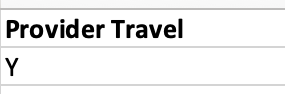
  1. the NDIS Support Catalogue shows Travel is allowed to be claimed. There should be a Y in the 'Provider Travel' column in the NDIS Support Catalogue:
    Provider Travel column
     
  2. the travel charge complies with pricing guides from the NDIS (I.e cannot charge more than allowed)
     
  3. the travel is necessary in order to deliver a specific disability support item to that participant
     
  4. the support is delivered face-to-face to the participant
     
  5. the provider explains the travel charge and why it is a good use of the participant's funds
     
  6. the provider has the participant's agreement that travel costs can be claimed and the amount that can be claimed
     
  7. the provider is required to pay the worker delivering the support for the time they spent travelling 
    OR the provider is a sole trader and is travelling from their usual place of work to or from the participant, or between participants.

How much can a provider charge for Travel?

The maximum amount of travel time a provider can claim for the time spent travelling to each participant (for each eligible worker) is:

  • 30 minutes in MMM1-3 areas
  • 60 minutes in MMM4-5 areas.

Use this resource on Understanding the MMM Model to work out which MMM zone the participant is located in

How much can Therapist/Capacity Building Provider Charge?

See our resource titled How much can me NDIS therapist charge me for travel

What transport costs CAN'T be claimed from an NDIS Plan?

  • Transporting participants to doctor's appointments
  • Transporting participants to visit friends
  • Providers of SLES supports cannot be paid for Activity Based Transport related to the delivery of the supports. 


MyCareSpace resources may be shared provided they are credited to MyCareSpace with backlinks to the original resource.

Resource Author: Bianca S. | NDIS Expert   Last Updated: 15 June 2026
NDIS


Do you need a Recovery Coach or other NDIS services?
MyCareSpace can send you options!

 Find out more

or call 1300 2888 93


This article explains the newly added NDIS funded role of a recovery coach, what they do and how to go about finding one.

What is a recovery coach?

A Psychosocial Recovery Coach (recovery coach) is a new NDIS support item for participants with a psychosocial disability who require support managing complex challenges of daily living.

The aim is to increase participants’ social and economic independence and participation through the provision of capacity building supports.

Recovery coaches will focus on coaching participants to have greater participation in managing their lives, and will collaborate with other services to support and underpin these outcomes.

Recovery coaches will work collaboratively with participants, their families, carers and other services to design, plan and implement a recovery plan, and assist with the coordination of NDIS and other supports. 

Participants will have the option of selecting a recovery coach with lived experience or a recovery coach with learnt knowledge of psychosocial disability and mental health. Find NDIS psychology providers on MyCareSpace.

What is a psychosocial disability?

The NDIS Commission defines psychosocial disability as:

‘A mental health issue that affects people’s daily activities such as socialising or interacting with others in a social setting, learning or self-care, or their capacity to fully participate in society’.

Some of the specific disorders include:

  • schizophrenia
  • obsessive-compulsive disorder (OCD)
  • bi-polar disorder
  • severe and persistent anxiety and depression.

People experiencing these issues may have substantially reduced functional capacity (ability to undertake) any of the following:

  • communication
  • social interaction
  • learning
  • mobility
  • self-care
  • self-management
  • social and economic participation.

What is meant by ‘recovery’ under the NDIS?

The NDIA defines recovery as ‘achieving an optimal state of personal, social and emotional wellbeing, as defined by each individual, whilst living with or recovering from a mental health condition.’ For a more detailed view see 'Psychosocial Disability Recovery and the NDIS'.

Mental health experts agree that those experiencing psychosocial disabilities are likely to greatly benefit from having choices and feeling more in control of their daily living and self-management.

Social and economic participation are also empowering and can help overcome feelings of isolation and worthlessness.

Recovery coaches can facilitate these positive outcomes for increased wellbeing and quality of life.

Who can be a recovery coach under the NDIS?

A recovery coach may be:

  • someone with a lived experience (called a lived experience recovery coach), or
  • someone with learned experience and knowledge of psychosocial disability and mental health,

Recovery coaches must have:

  1. tertiary qualifications in peer work or mental health (minimum of Certificate IV in Mental Health Peer Work or Certificate IV in Mental Health) OR equivalent training
    AND / OR
  2. a minimum two years of experience in mental health-related work

Since funding for a recovery coach falls under the Support Coordination category in the NDIS Support Catalogue, a Support Coordinator or a Support Coordination company with the relevant experience could perform this role.

NDIS Providers need to be registered for Registration Group 06: 'Assistance In Coordinating Or Managing Life Stages, Transitions And Supports' in order to deliver these supports.

What does a recovery coach do?

Specifically, the NDIS requires recovery coaches to:

  • develop recovery-enabling relationships for participants, based on hope
  • support participants with their recovery planning
  • coach participants to increase their recovery skills and personal capacity (eg, motivation, individual strengths and decision making)
  • ensure that other supports are recovery oriented
  • support engagement with the NDIS
  • assist with plan implementation

Recovery coaches will work with a participants’ family, carers and relevant service providers to implement a recovery plan

How does a Recovery Coach differ from Support Coordination?

Although the support provided by a support coordinator and a recovery coach may appear to be similar, many more hours are expected to be allocated to a recovery coach over an extended period. For example, 1 hour per week for the year (50 hours).

What is a Recovery Plan?

According to the NDIA, a recovery plan will

  • build on, and if needed, clarify and break down goals into short-term objectives
     
  • identify strengths and barriers
     
  • enable the person to identify areas of life where they have choice and areas of life where they have no choice (i.e.decisions are made by other people)
     
  • identify key contacts who are in the person’s life and are able to support them
     
  • map the identified goals with available and potential resources and services
     
  • identify early signs that may require changes in supports and identify how supports can be adjusted to meet fluctuating needs.

    This may include an increased level of support from clinical services and increased use of NDIS supports
     

  • support the person to plan and manage available resources and services in the broader service system (including, for example, their NDIS funded supports and clinical mental health services) to optimise the use of these resources
     
  • clarify how NDIS supports complement and interact with other supports, such as clinical services
     
  • help the person navigate the broader NDIS service system
     
  • clarify roles and responsibilities of the person, recovery coach, clinical supports and other supports.

What funding category covers a recovery coach in my NDIS plan?

Funding for a recovery coach falls under the Support Coordination category in the NDIS Price Guide and Support Catalogue.

NDIS Providers need to be registered for Registration Group 06: 'Assistance In Coordinating Or Managing Life Stages, Transitions And Supports'.

A provider of this support would need to undergo a Certification Audit (Medium Risk: Core Module Only).

Recovery Coach line items in the price guide

Different price limits apply depending on the Time of Day and Day of Week on which the support is delivered.


How do I find an NDIS recovery coach?

Many of the Support Coordinators listed on the MyCareSpace platform offer recovery coaching.

Use our VIP Support Request form to have one of our connections team locate a recovery coach in your area.

FIND ME A RECOVERY COACH


No you need a Recovery Coach or other NDIS services?
MyCareSpace can send you options!

 Find out more

or call 1300 2888 93


MyCareSpace resources may be shared provided they are credited to MyCareSpace with backlinks to the original resource.

Resource Author: Bianca S. | NDIS Expert   Last Updated: 11 March 2026
NDIS

We asked one of our members to share their practical experience about making the decision to self manage and what it actually involves - a question we receive weekly at MyCareSpace. Here's what she had to say:

During an NDIS planning meeting you will be asked how you would like to manage your NDIS funding.  You have a choice between self-managed, plan-managed, NDIA-managed or a combination of all three.

If you are unsure which to choose you should know that self-managed will ALWAYS give you the greatest flexibility over your funding.

Being self-managed means you are not bound by the NDIS price guide.  For example you can pay a higher hourly rate for a therapist if you think they are worth it. 

You can pay any provider or buy any support as long as it is legal and safe, it will help you achieve your plan goals and you have the funding in your budget. 

A useful checklist on Page 10 of ‘Booklet 3 -Using your NDIS plan’ will help you to know what you can spend your funding on.  If you can tick all the boxes in this checklist then you are good to go!

How difficult is it to self manage my NDIS plan?

You may be thinking that self-management sounds like a difficult, time-consuming option.  But it’s really no different to paying a regular household bill.  If you are doing that already, you are more than capable of self-managing. 

It takes me 3 minutes and 20 seconds to submit a claim for reimbursement and organise my records (yes I timed myself). 

The hardest thing about self-managing is just remembering to do it.

What do I actually have to do when making a claim as a self manager?

This is breakdown of what I do:

  1. Print the emailed invoice. 
  2. Enter the invoice details into a basic spreadsheet which tracks the budget totals. 
  3. Log into the NDIS myplace portal via myGov and make a payment request by filling in the required information. 
  4. After pressing submit, I print this page as it lists the payment request number. 
  5. Record the payment request number on my spreadsheet. 

Generally, the funds will appear in my nominated bank account the next day. 

It then takes me another minute to pay the invoice, print a receipt and staple the invoice, payment request and receipt together and file in a folder.  It isn’t even necessary to keep hard copies (that’s just how my brain works). 

All your record keeping could be done digitally and there are even apps available to help you manage your payments/funds balance.  You can pick whatever system works for you.  You are simply required to keep records for 5 years in the event you are ever audited, which is no different from what the ATO require for tax purposes.  Over a month, I probably spend half an hour on the required record keeping.

How is self managing different to plan managing?

If you are someone who doesn’t enjoy paying bills, then you might chose to be plan-managed instead.

This means someone else will pay the bills and keep records for you.  One disadvantage is that plan-managers have to stick to the NDIS price guide and may be less willing to let you be creative with the services or goods you purchase. 

You would also need to trust that your plan-manager is paying the bills on time and keeping you in the loop as to where your funding is at. 

I would recommend logging into the myplace portal to keep a track of your budget balances and approving every invoice before it is paid, in-case of billing errors.  So self-management is really only an additional step on top of this. 

The option of NDIA-managed gives you the least choice and control because:

  • you can only use registered providers and
  • are bound by the NDIS price guide. 

It is also a lot harder to keep a track of your funding as payments occur in the background. 

You have to trust implicitly that providers are charging correctly.  The MyCareSpace resources titled Self Management vs Plan Management shows you the difference between these three choices.

My experience with self managing

My daughter was one of the first NDIS participants in a trial area.  Her first plan was automatically set up as NDIA-managed because she was accessing state services (I didn’t know any better). 

We moved interstate a couple of months later and her plan was switched to self-managed as the NDIS had not been rolled out in that state.  I was left to my own devices with no real guidance of what to do.  But it’s not like that anymore. 

Back then, I didn’t understand I had flexibility with how we used her funding.  If I had known that, I would have made different choices in the supports we chose to engage to help her achieve her goals.  There is now lots of information available from NDIS to guide you, peer support groups, courses (you can use some of your plan funding to upskill yourself) and online resources that can give you the knowledge and confidence that self-management is the right choice for you. 

Here are some practical tips and tricks for self-management:

  • Check each invoice you receive, providers make billing mistakes.
     
  • Photocopy or scan paper receipts because they can fade over time.
     
  • If you submit a payment request before 5pm on a weekday, the funds will usually be in your account the next day. 
     
  • Record the payment request number with each invoice.  In the event you are audited you will be asked for evidence of a claim related to a particular payment request number.  It will just be easier to find what you are looking for.
     
  • Open a separate bank account for reimbursement of your NDIS funds, it just keeps things tidier.  I have a separate account ‘In Trust’ for my daughter. 
     
  • You might choose to have a separate email account for all your NDIS correspondence, I just use a separate folder on my personal email account.
     
  • Ask your LAC or planner for a copy of the NDIS guide to:Self Management when you get your plan.
     
  • Listen to others experiences but take any ‘advice’ with a grain of salt, they may not be correct.  But you might learn some good ideas about how to use your funding.

So what can I buy with my funds when I'm self managing?

You will always hear people saying you can’t buy this or you can’t buy that when using your NDIS funding. 

But it is important to remember that what anyone buys with their self-managed funding will be different for each individual. 

Remember to use the checklist when deciding what you can spend your funding on and if you tick all the boxes then have confidence that you are doing the right thing.  Good luck!

*Please note: This is written from the prospective of a mum who is the nominee for my child’s NDIS plan.  So while I talk about my plan, I understand that it is my daughter's plan and funding, not mine. 

MyCareSpace can offer you support in self-managing

As a self-manager, you are still not alone.

Our Connections Team will help you find options in your local area that meet your needs.

Get in touch today

People having a chat


MyCareSpace resources may be shared provided they are credited to MyCareSpace with backlinks to the original resource.

Resource Author: Bianca S. | NDIS Expert   Last Updated: 11 March 2026
NDIS

Specialist Disability Accommodation (SDA) refers to housing that is adapted and accessible to accommodate the specific needs and requirements of tenants. SDA does not refer to the support services available to the tenant, but the homes in which these are delivered.

SDA may include special designs for people with very high needs or may have a location or features that make it feasible to provide complex or costly supports for independent living.

Some people with very high needs require special accommodation that enables them to receive the supports they need. The National Disability Insurance Scheme (NDIS) refers to this as Specialist Disability Accommodation (SDA). Participants who are assessed as needing SDA as part of their reasonable and necessary supports will receive funding to cover the costs of SDA.

Find an SDA vacancy - SDA Vacancy Matching


MyCareSpace resources may be shared provided they are credited to MyCareSpace with backlinks to the original resource.

Resource Author: Bianca S. | NDIS Expert   Last Updated: 11 March 2026
NDIS

Find a Support Coordinator

What is an NDIS Support Coordinator?

Support Coordination (if required) is included in the Capacity Building budget. This is a fixed amount for "strengthening participant’s abilities to coordinate and implement supports in their NDIS plans and to participate more fully in the community".

It's important to note that funding for Support Coordination is not meant to be permanent, so you may not receive this funding in each plan. A Support Coordinator will help build your skills and capacity over time.

An NDIS Support Coordinator will:

  • support you to understand and implement the funded supports in your NDIS plan 
  • link you to community, mainstream and other government services
  • support you to build your ability to exercise choice and control
  • connect you with service providers
  • assist you in preparing for your NDIS plan review
  • assist you to 'optimise' your NDIS plan, ensuring that you are getting the most out of your funded supports
  • help in times of crisis to resolve points of crisis and develop capacity and resilience

A support coordinator should be like your right hand man/woman. They help you think of ways to best spend your NDIS funding. 

This may involves locating unique services, or helping you find providers that you can connect with.

How can a Support Coordinator help you with Service Providers?

A Support Coordinator will assist you to:

  • connect with providers of supports you need
  • negotiate with providers about what they will offer you and how much it will cost out of your NDIS plan
  • creating service agreements with NDIS service providers and
  • create service bookings

Can I get Support Coordination if I self-manage or plan manage my NDIS plan?

YES. The way you choose to manage your plan has no effect on whether you receive funding for support coordination.

Funding for support coordination is decided by what is considered reasonable and necessary for each participant.

What are the 3 different kinds of Support Coordination?

There are three levels of NDIS support coordination that can be included in your plan:

Support Connection 

This support is to build your ability to connect with informal, community and funded supports enabling you to get the most out of your plan and achieve your goals.

Support Coordination

Otherwise called Coordination of supports, this support will assist you to build the skills you need to understand, implement and use your plan.

A support coordinator will work with you to ensure a mix of supports are used to increase your capacity to maintain relationships, manage service delivery tasks, live more independently and be included in your community.

Specialist Support Coordination

This is a higher level of support coordination for people whose situations are more complex and who need specialist support.

It may be provided by a professional with an Allied health background or someone with Psychological expertise

In the same way that regular ‘Support Coordination’ helps bring your NDIS plan to life by connecting participants to providers, Specialist Support Coordination achieves the same goal but addresses more complex support needs.

Can a Support Coordinator come to my plan review meeting?

Support Coordinators can attend planning meetings (and be paid to do so), so long as they are not there as an “advocate”.

This is because The Department of Social Services funds organisations through the National Disability Advocacy Program (NDAP) to provide advocacy support services to assist participants when engaging in NDIA processes.

If you need an advocate for an NDIS plan meeting, use the Disability Advocacy Finder. This is an online tool to help you find an advocacy organisation in you area.

How to find a Support Coordinator near you

The MyCareSpace team can connect you with support coordinators who have experience supporting individuals with your disability. Ask us to help you now.

Find a Support Coordinator

How do I choose the right Support Coordinator for me?

It is really important to get a support coordinator who has the skills and knowledge to support you and it is equally important to feel comfortable with them. 

Margaret McGrath, a Support Coordinator from Collabor8 Supports suggested this list of questions that you might ask a Support Coordinator before deciding if they are the one for you:

  • What do you know about my disability?
  • What are some of the local supports that you would recommend to me in my situation?
  • How will you communicate with me and my family?
  • Will you charge me for travel?
  • Will I see invoices before you submit them?
  • How will you track my progress toward reaching my goals?
  • How will you support me to learn the skills to become more self-sufficient so that I can manage my own supports?
  • What is your feedback and complaint management procedure?
  • What would be your plan if I get myself into crisis?

Do I need a Service Agreement with a Support Coordinator?

Yes, a support coordinator is like any other service provider and so needs a service agreement before starting their engagement.

Before signing a service agreement, you would decide whether they are the right fit.

Just like starting with any new provider, you can ask them questions that will help you make a decision on whether you will use them as a provider or not.

Below are a few items to include in your service agreement:

  • What are their prices? What is included? How will they charge you?
  • Do they wish to discuss a notice period for ending an agreement?

Remember, you have choice and control in the support you receive. This means you have the choice over who provides your supports and how they are provided.

What happens if I cannot get Support Coordination in my NDIS plan?

Don't worry though, MyCareSpace can be your digital support coordinator. They will help you find supports and services.

References

Find a Support Coordinator

MyCareSpace resources may be shared provided they are credited to MyCareSpace with backlinks to the original resource.

Resource Author: Bianca S. | NDIS Expert   Last Updated: 11 March 2026
NDIS

ILO Training Webinar: ILO's and the NDIS - Buy Now

What is ILO or Individual Living Options under the NDIS?

Individual Living Options (ILO) are living arrangements that focus on the individual and is an innovative alternative to group home services.

It is designed to be an alternative to the SIL model, for participants with moderate to high support needs.

ILO's are focussed on working with the participant and their family to consider their needs and preferences and design a flexible package of supports

An ILO is built as a result of holistically considering each individual’s preferences, strengths, assets, support requirements, informal and community supports. 

An Individualised Living Option is not determined by the home ownership or leasing situation or eligibility for Specialist Disability Accommodation (SDA) funding

An Individualised Living Option is the support provided and not the accommodation or dwelling itself (i.e. not the bricks and mortar).

Implementation often happens in stages and an ILO package (in an NDIS plan) includes:

  1. primary supports and
  2. supplementary supports

It also includes a separate funded component titled "Exploration and Design" which funds a 'support coordinators (of sorts) to assist a participant in exploring the Individualised Living Options paradigm and design an option suitable for themselves.

Once established the living arrangement is closely monitored and fine-tuned.

The NDIA has looked closely at how Shared Lives Plus in the UK operates as inspiration for ILO.

What are the ILO Options?

The new NDIS Individual Living Options (ILOs) provide a range of exciting possibilities. Here are some example scenarios:

  1. Hosts – living with a supporting family or individual in their home.
     
  2. Co-residents – a support worker lives with a person needing support and receives free or discounted rent and provides support.
     
  3. Living Together with a Supporting Friend – sharing with a friend who provides support.
     
  4. Living Together, Sharing NDIS Participants – two or more NDIS participants live together and share supports, living how they want.
     
  5. Living Together, Sharing NDIS Participants with Co-resident – as above, but a Co-resident lives in the house to provide additional support.
     
  6. Living Together, Supporting Families – families who live with and provide support, but get additional assistance to make the arrangement sustainable.
     
  7. Friendly Neighbours – a person who lives nearby and assists to build connections into the community.
     
  8. Circle of Support – volunteers supporting a person with a disability to live more independently.

Who does ILO suit?

  • Older children (over 18) looking to leave home
    People may be looking to become independent or live independently. They may have aging parents who are considering the future or they may have parents who have health issues.
     

  • Moving out of Group Homes
    Living in larger groups may not suit all people and they may want to have more control over how and where they live.
    They may not be happy where they are and want to choose who they live with.
     

  • Unsettled - looking for a place to call home
    Many people face moving around - often in temporary or emergency arrangements and are looking for a more permanent home where they can put down their roots and connect with their community. They are looking for their own place.They may be facing the threat of homelessness.
     

  • Moving and life changes
    People may be moving to a new area as a result of changes in their situation or by choice.

How to decide if ILO is right for you?

There are 6 important ideas behind Shared Living that help make it a success. These are referred to as the 'Principles of Shared Living' or sometimes as the 'Principles of Creating Home'. 

For an ILO to be the best option for a person, it needs to support these principles.

The 6 Principles of Shared Living:

  1. Belonging and connection – you have the right to build relationships and connect with other people
     
  2. Independent living – you can live an ordinary life
     
  3. Self-determination – you can be in control of your own life and make choices about how you live
     
  4. Flexibility – you can decide how things should be done so they suit the way you want to live your life
     
  5. Choice – you can choose where and how you live
     
  6. Trust – you can be trusted as an equal partner in your relationships.

How does the NDIA fund ILOs?

These line items appear within the CORE: Assistance with Daily Living Support Category as:

Individualised Living Option – Exploration and Design

This is funded by the hour and is much the same as Support Coordination. It can be provided by a Support Coordinator or by an ILO Service Provider and assists the participant in the decision making, exploration and implementation of an ILO option. 

Individualised Living Option – Support Model

This component is made up of a personalised and detailed package of primary and supplementary home and living supports.

The package also includes resources for monitoring and redesign component which is used to ensure that the supports are delivered and the participant is happy and well supported.

We are eagerly awaiting more information about the funding bands that will be used when making this determination.

Read more about the funding for these component in the NDIS price guide.

How to include​ ILO in My NDIS Plan?

If a participant is looking to explore their home and living options, the NDIS recommends seeking an “Identifying Housing Solutions” package at a review (whether scheduled or unscheduled) as these processes naturally take time.

The planner’s role usually involves funding an amount of support coordination for the exploration of various living options.

Do I need any reports?

There are no mandated reports that must be submitted, however in a practical sense an up to date functional assessment and a clear explanation of the preferred home and living model vs other options would be useful. 

ILO Training Webinar

ILO's and the NDIS

After our last successful webinar "Disability Accommodation & the NDIS", our disability accommodation experts were overwhelmed with enquiries about Individual Living Options (ILOS) and the NDIS.

We have teamed up with My Supports - one of the very first ILO providers to deliver our first ILO Training Webinar 

ILO Training Webinar - ILO's and the NDIS

A detailed introduction to ILO's covering the following topics:

  • Introducing ILOS
    • Individual Living Options under the NDIS
    • Different types of ILO
    • Transitioning to NDIS ILO from other ILO packages
       
  • ILO Suitability
    • When is an ILO the best option?
    • Who is eligible for ILO? 
    • What is the difference between ILO and SIL?
       
  • How does the NDIS Fund ILOs?
    • Core Funding Components
    • ILO Funding in an NDIS plan
       
  • How to get an ILO into your NDIS Plan
    • What is an "Identifying Housing Solutions” package and when is it needed?
    • Housing Goals
    • Reports/evidence and documentation needed
       
  • Implementing an ILO in your NDIS plan
     
  • ILO Stakeholders
    • The role of a Support Coordinator
    • The role of an ILO Provider

NOTE: All participants will receive a participation certificate

$95.00 incl GST

BUY NOW

==================================================

Resources:

MyCareSpace resources may be shared provided they are credited to MyCareSpace with backlinks to the original resource.

Subscribe to Using your NDIS Funds

Our Preferred NDIS Plan Manager

Plan Hero Plan Management is our preferred NDIS Plan Manager because they are independent and specialist Plan Managers who have both lived experience and expert NDIS knowledge. Plan Management is all they do!

Plan Hero helps you keep your funding organised and on track within each funding period, so you don’t overspend or leave funds unused. They make sure providers are paid on time and help you stay on top of your budget. Their team is easy to reach, with clear, direct communication and no waiting on hold (ever).

Plan Hero gives you the support you need to use your NDIS funding with confidence.