Key Points
- An orientation and mobility specialist (often shortened to O&M specialist) is a qualified allied health professional who helps people who are blind or have low vision travel safely and independently.
- Orientation and mobility support is recognised by the NDIS, with the NDIS Quality and Safeguards Commission formally recognising registration for Orientation and Mobility Specialists in March 2025.
- Support can cover everything from learning to use a white cane, to route planning, public transport training, and orientation to a new home, school or workplace.
- NDIS participants can typically access orientation and mobility services through Capacity Building supports in their plan, delivered by a registered NDIS provider.
What is an Orientation and Mobility Specialist?
An orientation and mobility specialist is a university-trained allied health professional who works specifically with children and adults who are blind or have low vision. Unlike occupational therapists or physiotherapists, who work across a broad range of physical and functional needs, O&M specialists focus solely on one thing: helping people understand where they are, and how to move through that environment safely and independently.
The profession is built around two connected skills. Orientation is about understanding your position in space, such as knowing where you are, where you're going, and how the two connect. Mobility is the physical skill of getting there safely, using tools such as a long white cane, a guide dog, or increasingly, GPS and smartphone navigation apps designed for people with vision impairment.
In Australia, anyone teaching white cane navigation or structured route training needs to hold a relevant tertiary qualification, typically a degree or postgraduate qualification in orientation and mobility. Many are also accredited through the Orientation and Mobility Association of Australasia (OMAA), the peak professional body for the field.
It's a relatively small and specialised profession compared to occupational therapy or speech pathology, which means demand for qualified orientation and mobility specialists can outstrip supply in some regions. This can be worth keeping in mind when planning ahead for supports in an NDIS plan.
What does an orientation and mobility specialist do?
Day to day, an O&M specialist's work is highly individual, built around a person's own goals, environment and level of vision. Common areas of support include:
- Route training: learning the safest, most efficient way to travel to specific destinations, such as a new school, workplace, shops or medical appointments
- Cane skills: assessment, fitting and training in the use of a long white cane or other mobility aids
- Sensory skills: teaching people to use hearing, touch and other senses to build a mental map of their surroundings
- Public transport training: building the confidence and skills to use buses, trains and trams independently
- Road crossings: teaching safe strategies for crossing streets and navigating intersections
- Technology training: introducing GPS apps, screen readers and other assistive technology suited to a person's level of vision
- Environmental assessment: reviewing a home, school or workplace and recommending changes that support safer, more independent movement
- Orientation to new environments: helping someone build familiarity with an unfamiliar space, such as starting at a new school or moving house
Support is generally delivered one-on-one, in the places that matter most to the person, including at home, at school, in the workplace, or out in the community. Many providers, including specialist vision organisations, also offer remote or telehealth-based O&M support for people in regional and rural areas.
O&M specialists often work as part of a broader team, alongside occupational therapists, orthoptists, optometrists, physiotherapists and teachers, particularly for children building both academic and independence-related goals side by side.
How does Orientation and Mobility Support fit into an NDIS plan?
Orientation and mobility services are now recognised as a funded NDIS support, under the Capacity Building support category, and specifically Improved Daily Living; the part of a plan focused on building skills for independence.
Supports must be linked to the participant's disability and considered reasonable and necessary to help them reach their goals, like other NDIS supports. For someone who is blind or has low vision, O&M training is typically covered.
In March 2025, the NDIS Quality and Safeguards Commission formally recognised registration for Orientation and Mobility Specialists as a distinct allied health profession. Since then, the National Disability Insurance Agency has also worked on introducing dedicated pricing for O&M supports, separate from the broader "Other Professionals" category that previously covered a wide range of unrelated disciplines. This is a meaningful shift for the profession, helping participants, planners and providers identify and claim for O&M support more accurately.
To access support, participants generally need:
- An NDIS plan that includes funding under Capacity Building (Improved Daily Life)
- A relevant diagnosis or evidence of vision impairment affecting daily function
- A registered NDIS provider, or the ability to self-manage or plan-manage funding to use a non-registered provider
Which NDIS line items does Orientation and Mobility support fall under?
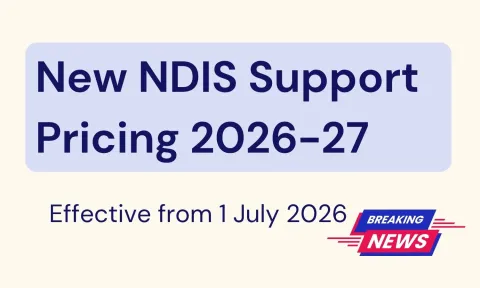
The new dedicated item number is 15_626_0128_1_3. The 2026-27 NDIS pricing schedule outlines a national rate of $156.16 per hour. Suffix item numbers apply for travel, telehealth, cancellation and NDIA reports. Remote area loadings also apply.
Because pricing and item numbers for O&M supports are new, we recommend confirming current details directly with your plan manager, support coordinator, or the NDIS Price Guide before booking services.
Who might benefit from Orientation and Mobility support?
O&M specialists work with people across all ages and levels of vision, including:
- Children who are blind or have low vision, building early orientation and independence skills
- School-aged children and teenagers navigating new campuses, transport routes or extracurricular activities
- Adults experiencing vision loss due to conditions like diabetes, stroke, brain injury or degenerative eye conditions
- People with vision-related impacts from neurological or brain-based conditions
- Older Australians experiencing age-related vision decline who want to maintain independence and confidence moving around their community
Support isn't limited to people with a formal blindness diagnosis: anyone whose functional vision significantly affects their ability to move around safely and independently may benefit from an assessment.
Getting an OMS assessment
Before you can request O&M funding in your NDIS plan, you'll usually need an assessment that documents how vision impairment affects your daily mobility and independence.
While orientation and mobility specialists carry out the specialised training itself, an Occupational Therapist (OT) can complete a broader functional assessment to support your NDIS funding request. This can include looking at how your disability affects everyday tasks, including mobility, and recommending the supports needed to address those barriers.
This assessment can strengthen your case alongside any O&M-specific reports, giving your NDIA planner a clearer, evidence-based picture of your support needs.
If you don't already have an OT involved in your plan, you can find a registered NDIS occupational therapist near you through MyCareSpace to get an assessment underway.
Evidence needed to get OMS funded under NDIS
Orientation and Mobility funding needs to meet the NDIS's reasonable and necessary test, so the strength of your evidence can directly affect whether a request is approved. Some examples of evidence that may help include:
- Confirmation of vision impairment or functional vision assessments
- Reports from an ophthalmologist or optometrist outlining the diagnosis and its severity
- A functional capacity assessment evidence showing how the vision impairment affects daily activities, specifically within the mobility domain (getting around safely, using public transport, navigating unfamiliar environments)
- Examples of safety concerns
- Information about school, workplace, or transport barriers
- A clear link to plan goals: the request should explicitly connect to a goal already in the participant's plan, such as independent travel to school, work or community access
- Evidence of expected outcomes showing how the support will build skills or reduce reliance on other supports over time, including family or carers.
Finding an Orientation and Mobility Specialist
Because it's a specialised field, orientation and mobility specialists aren't as widely available as some other allied health professions, and it's common to encounter a waitlist, particularly outside major cities. A few starting points:
- Search a provider directory like MyCareSpace to compare NDIS providers offering orientation and mobility services in your area
- Check with vision-specific organisations, such as Guide Dogs, many of which are registered NDIS providers with dedicated O&M teams
- Ask your NDIS support coordinator or local area coordinator for a referral
- Visit the NDIS website for guidance on finding and engaging providers, and understanding how funding for this support works
If your child or family member needs support urgently, for example, ahead of starting at a new school, it's worth flagging that timeline directly with providers, as some are able to prioritise time-sensitive referrals.
Getting started
Orientation and mobility support can make a difference to someones’ independence, confidence and safety for people who are blind or have low vision, whether that's a child learning to find their way around a new classroom, or an adult relearning how to move confidently through their neighbourhood after vision loss.
If your circumstances have changed or your support needs are changing then it might be time to have an NDIS plan review. It's worth discussing orientation and mobility goals with your planner or support coordinator, and using the MyCareSpace directory to connect with qualified O&M specialists in your area.
MyCareSpace resources may be shared provided they are credited to MyCareSpace with backlinks to the original resource.